PMP Domain Weights 2026: How to Study by Domain
- T. Laketia Jones
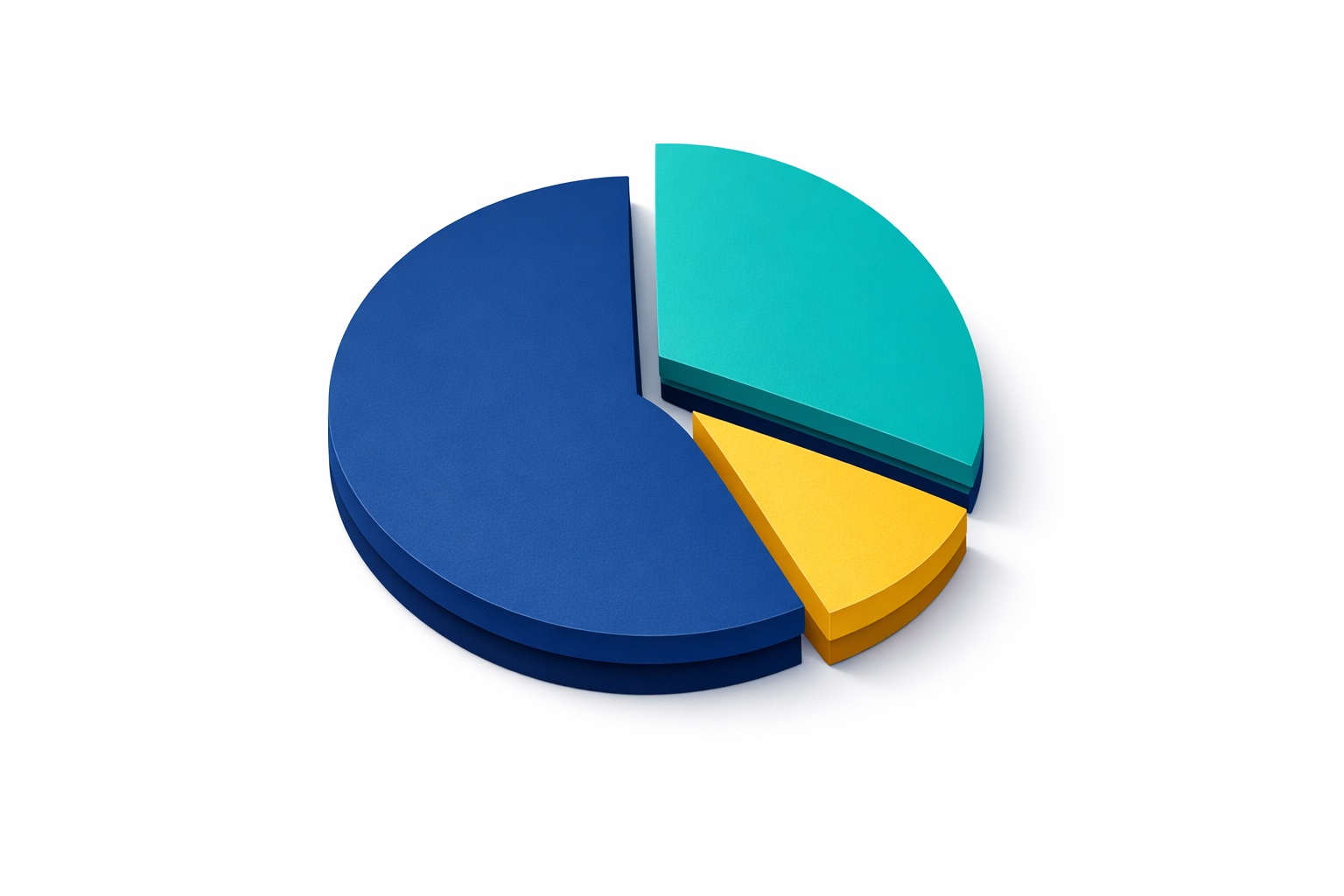
The July 2026 PMP Examination Content Outline (ECO) divides exam questions across three domains: People at 33%, Process at 41%, and Business Environment at 26% [S1]. If you studied with older materials, the biggest shift is the much larger Business Environment domain. Here is what each domain contains and how to turn the weights into a smart study plan.
Where the Numbers Come From
PMI builds the exam from a job task analysis of what practicing project managers actually do, and trends such as artificial intelligence and sustainability were used as inputs to that analysis [S2]. The ECO lists each domain's tasks, plus enablers that illustrate the work. PMI is clear that enablers are examples, not an exhaustive list, and that every exam includes questions addressing all tasks in each domain [S3].
The exam has 180 questions, of which 170 are scored and 10 are unscored pretest questions [S4]. Applying the weights to the scored items gives a rough sense of scale, but PMI notes that exact item counts can vary by form [S1].
Domain I: People
People has eight tasks [S5]:
- Develop a common vision
- Manage conflicts
- Lead the project team
- Engage stakeholders
- Align stakeholder expectations
- Manage stakeholder expectations
- Help ensure knowledge transfer
- Plan and manage communication
These tasks test leadership judgment: empowering the team, choosing a leadership style, resolving conflict through agreed strategies, and tailoring communication to stakeholder needs [S5]. Our post on emotional intelligence for project managers is a good companion read.
Domain II: Process
Process is the largest domain, with ten tasks [S6]:
- Develop an integrated project management plan and plan delivery
- Develop and manage project scope
- Help ensure value-based delivery
- Plan and manage resources
- Plan and manage procurement
- Plan and manage finance
- Plan and optimize quality of products and deliverables
- Plan and manage schedule
- Evaluate project status
- Manage project closure
Notice how often value appears. The planning task includes assessing plans for continued business value, and a full task is devoted to value-based delivery [S6].
Know your numbers before you plan. The free Skills Diagnostic scores you by exam domain so you can see which of the three needs the most time.
Domain III: Business Environment
Business Environment has eight tasks [S7]:
- Define and establish project governance
- Plan and manage project compliance
- Manage and control changes
- Remove impediments and manage issues
- Plan and manage risk
- Continuous improvement
- Support organizational change
- Evaluate external business environment changes
This is where risk, change control, compliance, and issues now live [S7]. If your past study focused only on strategy and organizational alignment, give this domain more attention than its old reputation suggests.
Read the Enablers, Not Just the Task Names
Task names are short. The enablers under each task show what PMI actually has in mind, and they are a goldmine for study [S3]. A few examples:
- Under Lead the project team, one enabler is determining an appropriate leadership style, and another is representing the voice of the team [S5]. Expect questions where the right leadership style depends on the team's experience and the situation.
- Under Develop an integrated project management plan and plan delivery, enablers include recommending a development approach and determining critical information requirements, with sustainability given as an example [S6].
- Under Evaluate external business environment changes, enablers include surveying changes in regulations, technology, geopolitics, and markets, and assessing their impact on scope or the backlog [S7].
- Under Remove impediments and manage issues, one enabler is recognizing when a risk becomes an issue [S7].
Turn each enabler into a question you could be asked, and you will have a ready-made review list.
Approaches Are Mixed Into Every Domain
The ECO notes that predictive, adaptive/agile, and hybrid approaches appear throughout all three domains, not in a single section. About 40% of items represent predictive approaches, and the remaining 60% are divided between adaptive/agile and hybrid [S1]. So a risk question may be set in a sprint, and a stakeholder question may involve a phase gate.
Turning the Weights Into a Study Plan
- Start with a baseline. Measure your current level by domain before deciding how to split your time.
- Weight by gap, not just by percentage. The exam weights tell you where points are. Your diagnostic tells you where you lose them. Combine both.
- Study tasks, not chapters. Use the ECO task list as your checklist and tick off each task when you can explain it and answer scenario questions on it.
- Mix approaches every session. Practice predictive, agile, and hybrid questions side by side.
- Practice the new question types. The July 2026 exam adds Case or Scenario and Graphic-Based questions [S8]. Our guide to scenario-based questions explains how to approach them.
For a full rundown of everything that changed, see our 2026 PMP exam changes article.
Frequently Asked Questions
What are the PMP domain weights for the July 2026 exam?
People 33%, Process 41%, and Business Environment 26% of exam items [S1].
How many tasks are in the July 2026 ECO?
Twenty-six: eight in People, ten in Process, and eight in Business Environment [S5][S6][S7].
Is agile its own domain on the PMP exam?
No. Predictive, adaptive/agile, and hybrid approaches appear across all three domains; about 40% of items are predictive and 60% are adaptive/agile or hybrid [S1].
Where is risk management on the new exam?
Plan and manage risk is a task in the Business Environment domain, alongside change control, compliance, and issue management [S7].
Your Next Step
The PMBOK 8 Exam Prep course is organized around the July 2026 domains and tasks, and it provides the 35 contact hours required to apply. Pair it with a free PMP practice exam to see how the weights feel under time pressure.
Sources
- [S1] PMI, PMP Examination Content Outline (July 2026), p. 5 (domain weights; approach mix)
- [S2] PMI, PMP Examination Content Outline (July 2026), p. 4 (job task analysis; trends)
- [S3] PMI, PMP Examination Content Outline (July 2026), p. 6 (domains, tasks, and enablers)
- [S4] PMI, PMP Examination Content Outline (July 2026), p. 17 (exam format)
- [S5] PMI, PMP Examination Content Outline (July 2026), pp. 7-8 (People tasks)
- [S6] PMI, PMP Examination Content Outline (July 2026), pp. 9-10 (Process tasks)
- [S7] PMI, PMP Examination Content Outline (July 2026), pp. 11-12 (Business Environment tasks)
- [S8] PMI, PMP Examination Content Outline (July 2026), pp. 18-19 (question types)